
The Ultimate DIY Campsite Checklist
Posted by Kevin Green on Mar 30th 2026
Key Takeaways:
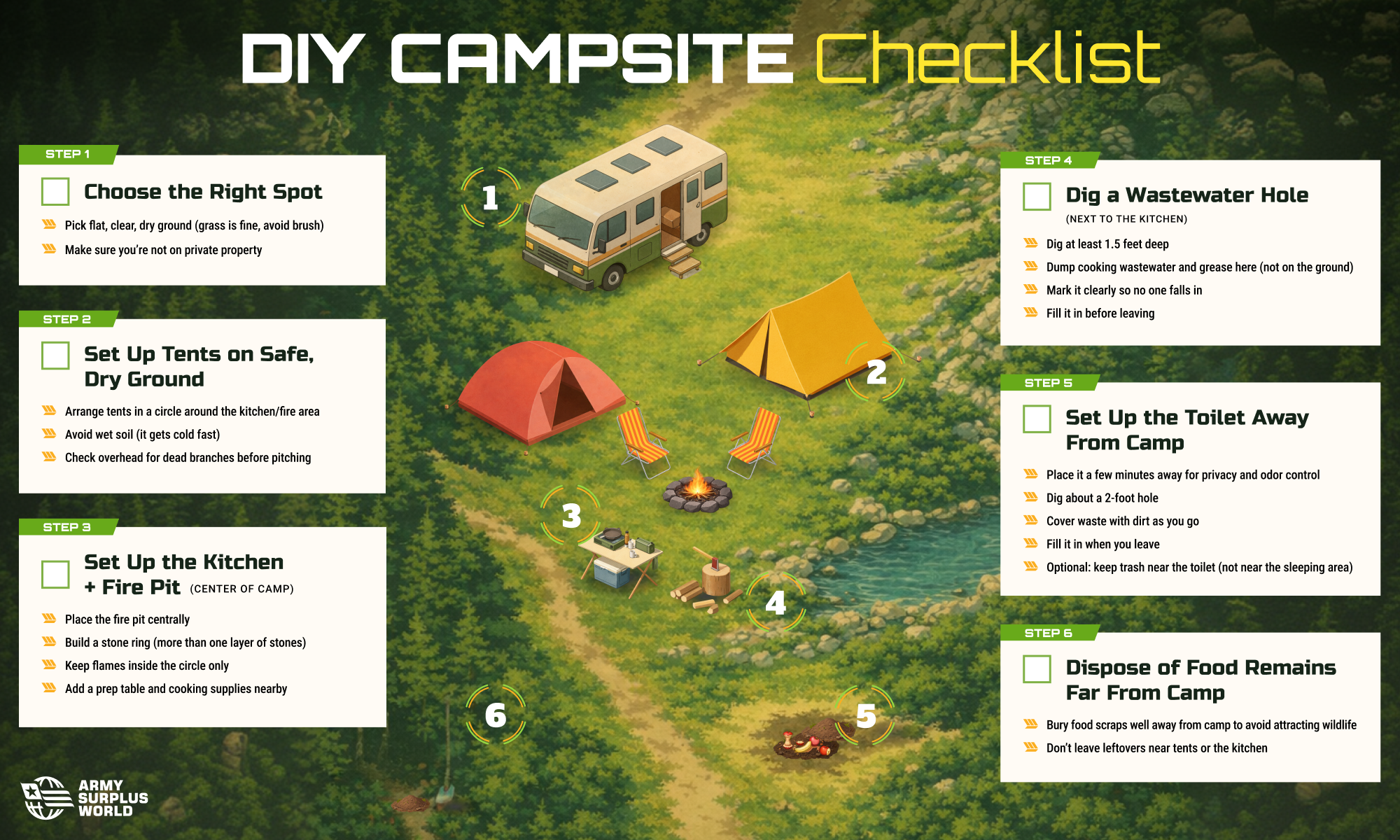
- Set up camp on a flat, clear, dry patch of soil
- Follow safety protocols when building a fire pit
- Dig up a wastewater hole for cooking
- Establish the toilet a few minutes away from camp
- Dispose of food remains far away from camp to avoid attracting wildlife
- Set up tents on dry ground, with no dead branches above
Most outdoor enthusiasts will gladly rent a pre-made campsite to save time on setting up their own, but there are positives to a DIY campsite. They’re a great group project, they allow you to tailor your campsite to your needs, and they come with a sense of pride once you’re finished.
Be that as it may, there are a few crucial things to consider when setting it up. This is the ultimate DIY campsite checklist.
Look for Flat, Clear Land
If you’re wondering how to set up a campsite, you might be thinking that the sleeping area is the first thing you go for, but you’d be wrong.
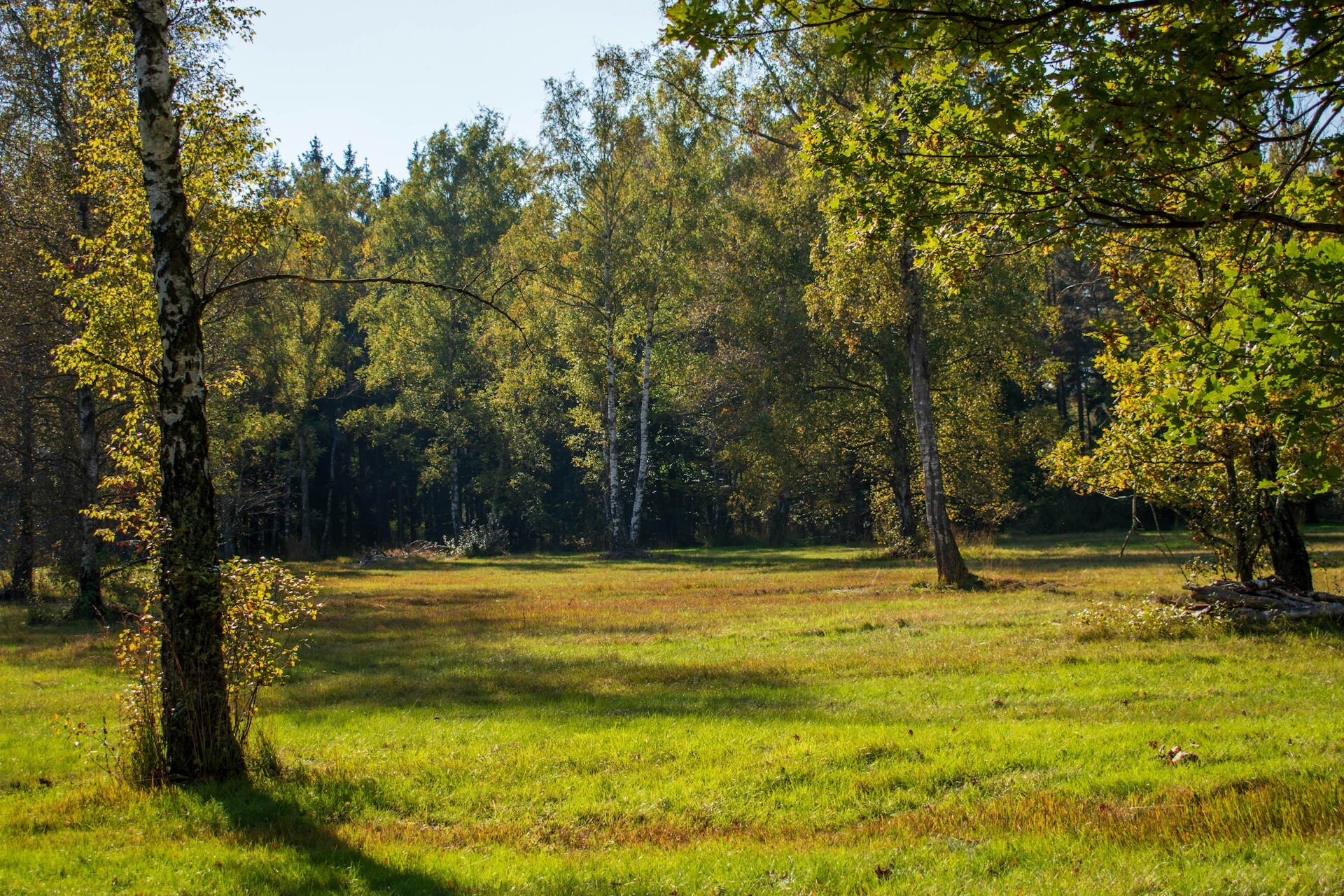
Before you start setting up your tent, toilet, cooking facilities, and other campsite elements, you need to pick your spot. First of all, make sure you’re not setting up camp on someone else’s property - that’s illegal.
Secondly, the general rule of thumb with choosing a camping spot is that the flatter and clearer it is, the better. Flat ground will make the building process much easier, not to mention that sleeping, cooking, and all other activities are easier when you’re not actively trying not to roll down a slope. As for the importance of clear ground, grass is fine, but brush and bushes will get in the way of everything - you need to clear it out before setting up camp (a strong enough stick can be just as good as a machete for this job).
Setting Up the Cooking Area
There are three crucial elements of a DIY campsite - sleeping areas, toilets, and the kitchen.
Starting with the latter, a kitchen is very easy to set up. Although we have mobile camping kitchen sets nowadays, many people still love to cook over a campfire simply because it lets them immerse themselves in nature. Both options are entirely viable, and there’s no difference in the result, only in cooking efficiency.
If you want to build a campfire (this guide applies even if you don’t intend to use it for cooking, but for roasting marshmallows or just as a centerpiece for evening hangouts), it should be placed centrally at the campsite.
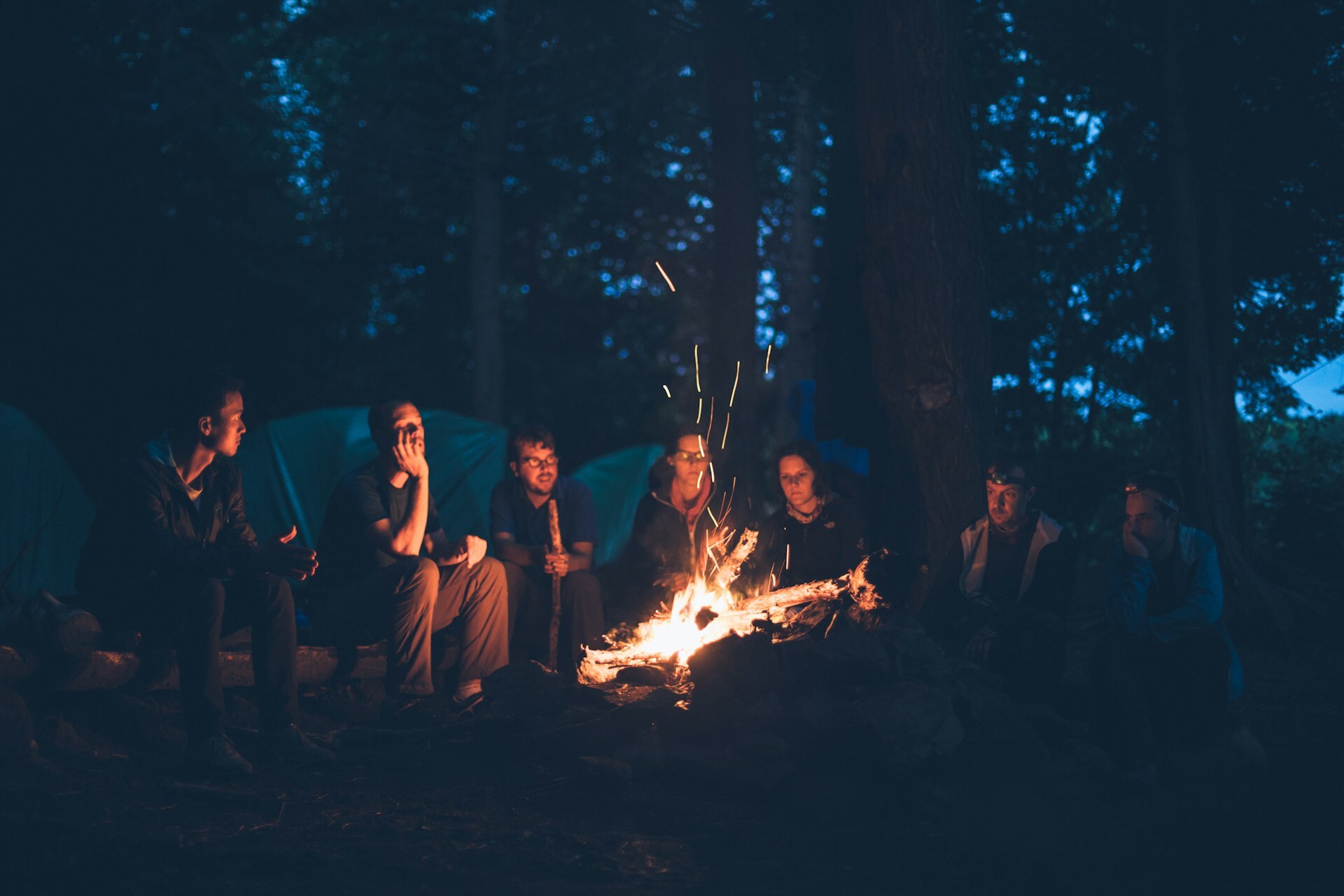
To build a campfire, use stones (found in the wild) to make a circle in the ground. The stone line shouldn’t consist of a single string of stones - add more to ensure that the fire doesn’t spread. This is pretty much all there is to it regarding fire safety - do not light a fire outside of the stone circle.
If you want to use the campfire to cook a stew, you can build your own tripod from strong sticks (or buy one).
The kitchen should also include a small table for food preparation (foldable tables are the easiest to transport) alongside cooking supplies.
The final thing your kitchen needs is a wastewater hole, which many people forget about. You don’t want grease and other leftovers to stay on the ground - not only will it smell badly, but it will also attract wildlife.
To solve this problem, grab your shovel and dig a hole at least 1.5 feet deep right next to your cooking area. Dispose of all your cooking wastewater in the hole, and make sure to mark it with a tripod so no one falls in. Once you’re finished with camping, fill the hole back up with dirt.
Finally, make sure to dispose of all food remains far away from camp. You do not want a bear smelling raw meat right next to you - dig it into the ground at least a mile away from camp.
Setting Up a Toilet
If you’re wondering how to build a toilet at a campsite, worry not - it’s easier than building a kitchen.
First of all, build it at least a few minutes away from the campsite - this is both for privacy and smell. Then, dig a 2-foot hole in the ground, hang some toilet paper on the nearest branch, and create a mound of dirt next to the toilet. The soil from the mound will be used to cover the excrement to mitigate smell (no need to use it after urinating, as the ground will naturally absorb the urine).
That’s all there is to it - just make sure you fill the hole back up when you’re leaving.
Another smart thing you can do to fight foul odors at your DIY campsite is set up your trash next to the toilet - that way it won’t smell next to where you’re sleeping.
Setting Up Tents
Setting up the sleeping area is the easiest part of a DIY campsite design. Ideally, you would set up your tents and military cots in a circular pattern around the kitchen and fire pit (which are centrally located) so everyone has some privacy, and it also helps with campers who snore a lot.
The only things you really have to look out for are wet soil and dead branches - you do not want a 50-pound branch falling on your head as you sleep. Make sure that there’s either nothing above your tent or that all the branches above are healthy.
Avoiding wet soil is part of the How To Build a Campsite 101 curriculum: soil is naturally cold, and wet soil will cool you from the bottom, in addition to absorbing your body heat. When you’re choosing a spot for your tent, make sure that the soil is hardened.